Hitting mats are essential for any golfer looking to practice at home or in a garage, garage gym, or outdoor space. This guide highlights five reliable options across budgets and needs, focusing on durability, feel, and shock absorption. Each product below is chosen for realistic turf feel, impact protection, and stability on different surfaces. Use the quick comparison table to compare core specs at a glance.
| Product | Brand | Size | Key Benefit |
|---|---|---|---|
| SAPLIZE 23″ x 16″ | SAPLIZE | 23″ x 16″ | Large practice zone; reinforced turf for long life |
| COSPORTIC Golf Hitting Mat 16″x12″ | Cosportic | 16″ x 12″ | Velvet turf; swing path feedback |
| Bearwill Golf Mat 5ft x 4ft | Bearwill | 60″ x 48″ | High-density turf; durable for many shots |
| Bltend Golf Mat 5x4ft | Bltend | 60″ x 48″ | Ultra-thick cushioning; all-surface use |
| GoSports Golf Hitting Mat 5 x 4 ft | GoSports | 60″ x 48″ | Commercial-grade turf; included tees |
Saplize 23″ x 16″ Foldable Golf Hitting Mat
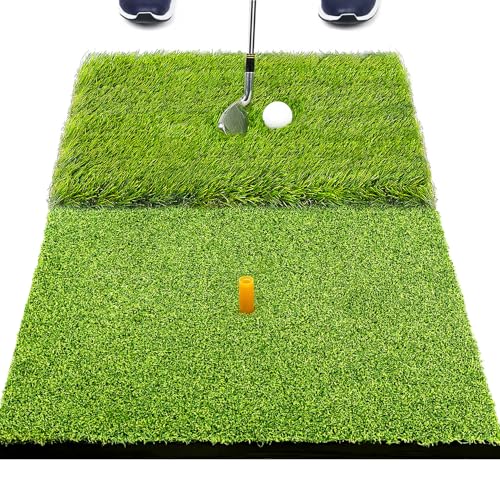
The Saplize mat offers a notably large practice surface, nearly 40% bigger than many 3-in-1 collapsible mats. It supports driving, chipping, and putting in one compact unit, making it suitable for indoor garages or outdoor patios. An EVA foam base enhances shock absorption to protect wrists and clubs after repeated shots, while a reinforced glue layer and realistic turf provide durability and a true-feel fairway/rough transition. This mat is designed for long-term use with less wear under frequent practice sessions.
COSPORTIC Golf Hitting Mat

Cosportic emphasizes swing path feedback with a velvet turf that reduces abrasion on club faces and resists fading. The mat includes a replaceable velvet surface and a guidance surface to help visualize your path. This makes it a good option for beginners and intermediate players who want clearer swing feedback without sacrificing turf feel. The soft texture promotes comfortable practice while preserving the longevity of clubs and gear.
Bearwill Golf Mat 31mm Thick 5ft x 4ft

Bearwill combines a 16mm high-density synthetic turf with a robust 15mm EVA base and an elastic interlayer for excellent impact absorption. The mat is designed to withstand up to 150,000 hits, making it a solid choice for serious practice sessions. The anti-slip bottom helps stabilize the mat on uneven ground, providing a stable surface for full swings, chips, and contact shots across indoor garages or outdoor driveways.
Bltend Golf Mat 36mm Thickened 5x4ft

The Bltend mat features a substantial 36mm cushion—16mm dense turf plus a 20mm high-elasticity EVA pad—to absorb over 90% of ground impact. The dense turf resists flattening and wears well against weather, making this mat suitable for daily use on concrete, grass, or simulator setups. Its UV-resistant turf is designed for all-weather performance, a key advantage for outdoor practice in varied climates.
GoSports Golf Hitting Mat
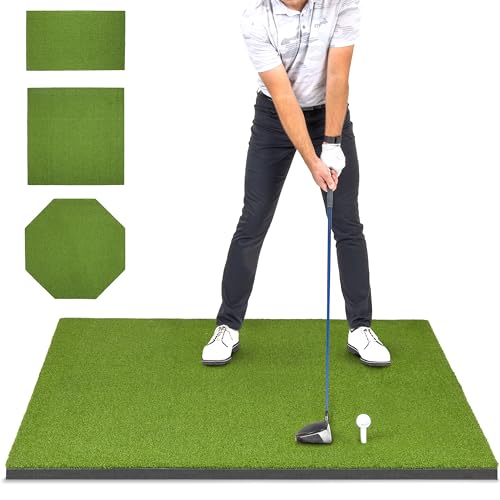
GoSports delivers an elite turf feel with a premium EVA foam base for outstanding shock absorption. The non-slip backing ensures firm placement on concrete or turf, supporting repetitive swings without moving. The mat is designed by golfers for durability and consistent ball feedback, capable of handling high-volume practice. Included tees add value for tee practice sessions and drive-focused workouts.
Buying Guide: Key Purchase Considerations
Choosing a hitting mat depends on space, surface, budget, and practice goals. Consider the following factors to optimize your selection:
- Size and surface area: Larger mats provide more room for a full swing but require more space. Choose a size that fits your practice area without impeding movement.
- Turf feel and durability: Realistic turf texture improves swing feedback, while reinforced edges and tough backing reduce wear. Look for dense turf and a sturdy base to extend life under repeated hits.
- Shock absorption: Mats with EVA foam bases or thicker padding protect wrists and elbows, especially on hard surfaces like concrete. Higher thickness generally offers better impact relief.
- Surface adaptability: All-weather mats handle indoor and outdoor use. UV resistance and weatherproofing matter if you plan outdoor practice in sun or rain.
- Stability and anti-slip design: A non-slip backing or rubber bottom prevents slippage on hard floors and uneven ground, ensuring a stable practice session.
- Replaceable components: Some mats feature replaceable turf surfaces or velvety overlays for extended life and varied practice modes, which can reduce long-term costs.
- Included accessories: Tees, ball trays, or multiple turf textures (rough and fairway) expand training options without additional purchases.
Practice Perspectives: Different Scenarios
For beginners, a mat with clear swing-path feedback and a forgiving surface reduces fatigue and encourages repetition. Intermediate players may prioritize durability and turf realism to refine contact and ball flight. Those training on concrete or in a garage will benefit from high shock absorption and anti-slip stability to protect joints and maintain consistent alignment. Finally, outdoor enthusiasts should lean toward UV-resistant turf and weather-tolerant materials to withstand seasonal use.
Usage Scenarios and Quick Tips
- Place the mat on a flat surface to prevent uneven wear.
- Use a light practice setup initially to gauge feel before full swings.
- Rotate between turf textures (rough/fairway) if available to simulate different courses.
- Regularly inspect edges for fraying and replace worn parts to extend life.
These five mats provide a range of options for different spaces and practice needs. By evaluating size, durability, and cushioning, you can select a mat that supports consistent swing development while protecting joints and clubs.