Upgrading a golf cart to a 48V lithium battery system can deliver longer range, faster charging, and better overall durability. This guide highlights five top 48V lithium battery conversion kits designed for golf carts, focusing on safety features, cycle life, and ease of installation. Each option provides robust protection, user-friendly monitoring, and dependable performance across terrain and climates.
Summary of featured products:
| Product | Brand | Capacity / Key Features | Approx. Weight |
|---|---|---|---|
| LOSSIGY 48V Battery Conversion Kit | LOSSIGY Store | 100Ah, 48V LiFePO4, built-in BMS, Bluetooth monitor | ~55 lbs |
| OGRPHY 48V 100Ah Battery | OGRPHY Store | 200A BMS, 1000A peak, LCD & monitor, 5.12kWh | ~52 lbs |
| OGRPHY 48V 105Ah Battery | OGRPHY Store | 200A BMS, 1000A peak, 5.37kWh, 50+ miles | ~55 lbs |
| XRH 48V 105Ah Battery Kit | XIONGRUIHENG Store | 200A BMS, 400A peak, 58.4V charger, LCD & straps | ~60 lbs |
| OGRPHY 48V 105Ah + 20A Charger Kit | OGRPHY Store | Includes charger, 2.8″ LCD, Bluetooth, 3C discharge | ~50 lbs |
LOSSIGY 48V Battery Conversion Kit

The LOSSIGY 48V conversion kit features Grade A LiFePO4 cells for higher energy density and stability. It includes an 18A charger and a built-in BMS to protect against high and low temperatures, short circuits, and overloads. With a claimed lifespan of up to 4000 cycles, this unit emphasizes reliability and long-term cost efficiency. Installation is designed to be straightforward, making it suitable for standard 48V golf cart systems. Use of Bluetooth monitoring enhances maintenance and performance tracking.
OGRPHY 48V 100Ah Battery With LCD Monitor

This kit combines a 100Ah LiFePO4 battery with a robust 200A BMS and a 1,000A peak capability for short-duration high power. It includes an LCD and mobile monitor for real-time voltage, current, and health status. A 5.12kWh capacity supports extended golf sessions, and the design emphasizes safety through UL-certified Grade A cells and comprehensive protection against thermal and electrical faults.
OGRPHY 48V 105Ah With Touch Monitor
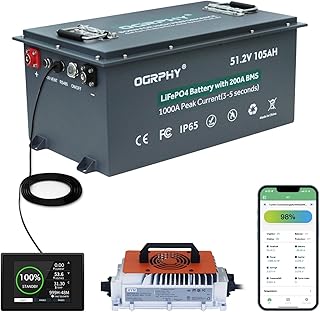
This 105Ah option integrates a powerful 200A BMS with peak currents up to 1000A for short bursts, aiming to preserve motor performance on steep grades. The kit features a built-in touch monitor and a mobile app, making it easy to track state of charge, health, and temperatures. The 5.37kWh capacity provides multi-hole runs between charges, and the system is designed for maintenance-free operation with a heavy emphasis on safety.
XRH 48V 105Ah Battery Kit

This kit advertises Grade-A cells with a 3C discharge rate, delivering reliable high-current output for challenging terrains. The included 58.4V 20A charger, a 2.8-inch LCD touch screen, and two mounting straps make setup comprehensive. The built-in Bluetooth 250A BMS provides protection against overcharge, over-discharge, and thermal issues, while permitting users to monitor performance and health via a mobile interface.
OGRPHY 48V 105Ah Battery Kit With Monitor
This variant emphasizes an all-in-one monitoring experience, with a touch display and Bluetooth integration to keep track of voltage, current, and health conditions. The 105Ah capacity supports longer runs, and the 200A BMS guards against dangerous over-current events. The package typically includes a dedicated charger and essential mounting components to facilitate installation within standard 48V golf cart configurations.
Buying Guide: Key Considerations for 48V Golf Cart Lithium Battery Conversions
- Battery chemistry and cycle life: LiFePO4 cells offer stable voltage, excellent thermal management, and thousands of charge-discharge cycles compared to lead-acid alternatives. Look for warranties that reflect this longevity.
- Battery management system (BMS): A high-current BMS (200A or more) with protections for over-charge, over-discharge, temperature, short-circuit, and overload is essential for safety and performance, especially on hills or rough terrain.
- Capacity and range: Higher Ah (amp-hour) ratings translate to longer driving ranges. Match capacity to your typical usage, motor power, and desired miles per charge.
- Monitoring and diagnostics: LCDs, Bluetooth, and mobile apps help track state of charge, health, and temperature. Real-time insights support proactive maintenance.
- Charger compatibility: Ensure the included charger matches your system’s voltage (e.g., 58.4V chargers for some 48V kits) and supports proper charging profiles for LiFePO4 cells.
- Weight and installation: Heavier packs require secure mounting and proper wiring. Favor self-contained designs that simplify replacement and reduce space demands in the cart.
- Safety and certifications: UL certification or similar standards indicate adherence to safety guidelines. Verify the presence of thermal management features and short-circuit protection.
- Maintenance expectations: Some kits are designed for maintenance-free operation for many years, while others may require periodic checks of BMS and connections.
- Cost of ownership: Consider the total lifecycle cost, including maintenance, expected cycles, and potential battery replacement timing.
- Compatibility with your cart: Confirm the kit is compatible with your cart’s controller and motor rating to avoid performance limitations.