Golf cart drive belts play a critical role in power transmission, affecting acceleration, engine load management, and overall reliability. This guide highlights five commonly recommended drive belt sets that fit a range of popular carts from Yamaha, Club Car, EZGO, and more. Each product is evaluated on compatibility, materials, and performance characteristics to help you choose a replacement that minimizes maintenance and maximizes uptime on the course or at the neighborhood, park, or worksite.
The following table summarizes the featured belts, including target models and primary functions. Use this quick reference to compare suitability at a glance.
| Product | Target Models | Replacement OEM | Key Benefit |
|---|---|---|---|
| MOCW Drive & Starter Belt Kit | Yamaha G2/G5/G8/G9/G11/G14/G16/G20/G22 (2012+) | J55-G6241-00; JN6-H1173-00 | Dual belt set for clutch and starter, broad Yamaha compatibility |
| Club Car Clutch & Starter Belt Kit | DS 1997-up; Precedent 2004-up | 101916701; 1016203 | Durable synthetic rubber belts for precise grip |
| A.A Drive Belt Kit for EZGO Marathon | EZGO 1976-1987 2PG gas | 14153-G1; 14153G1 | Classic size belt for mid-era EZGO two-cycle models |
| Nilight Clutch & Starter Belt Kit | Club Car DS 1997-up; Precedent 2004-up | OE 1016203; 101916701 | Aramid fiber and rubber blend for durability |
| ROYKAW EZGO Drive & Starter Kit | EZGO TXT, Cushman, Marathon, Medalist 1994-2013 | OEM 72054G01; 72025G01; 72025G01; 26414G01 | Comprehensive replacement for multiple EZGO models |
MOCW Drive & Starter Belt Kit for Yamaha G2/G5/G8/G9/G11/G14/G16/G20/G22

The MOCW kit combines a clutch drive belt and a starter generator belt designed to replace OEM parts J55-G6241-00 and JN6-H1173-00. It targets Yamaha models from G2 through G22, including 2012-up G29 models. The belts are built to endure frequent friction and varying loads, helping maintain consistent power transmission on the course. Note that this kit is not compatible with certain G3 and earlier G29 drive configurations. Each belt measures roughly 1-3/16 inches wide and about 39-1/2 inches in overall diameter, offering a balance of strength and flexibility for turf duty.
Compatibility and fit are central here: confirm your cart model and engine configuration before installation. The kit’s dual-belt design supports both clutch engagement and generator-driven charging, which can help prevent slippage and improve throttle response under load. Regular inspection for wear or glazing will extend belt life and optimize performance across seasonal use.
Club Car Clutch Drive Belt & Starter Belt Kit
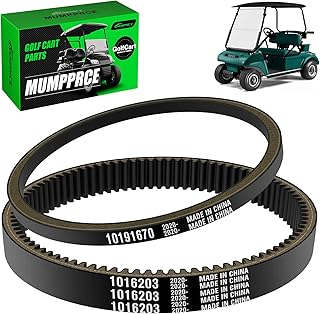
This kit is tailored for Club Car DS 1997-up and Precedent 2004-up gas golf carts. It includes a clutch drive belt and a starter generator belt, replacing OEM numbers 1016203 and 101916701 respectively. Constructed from high-tensile synthetic rubber, the belts are engineered to resist wear from constant friction and heavy loads. They maintain precise grip and power transmission year after year, ensuring smooth acceleration and reliable charging. It’s important to verify the fitment against your exact Club Car model and motor type to avoid misalignment or premature wear.
The kit’s durable materials support long service life in demanding conditions, including frequent stop-and-go operation and exposure to heat. For best results, inspect pulleys for glazing or cracking and replace belts in matched pairs when signs of wear appear on both belts. This helps prevent belt misalignment and uneven wear that can compromise drive performance.
A.A Drive Belt Kit for EZGO Marathon 1976-1987 2PG

The A.A kit targets EZGO Marathon two-cycle gas carts from 1976 to 1987, replacing OEM part numbers 14153G1 and 14153-G1. The belt measures about 1-3/16 inches wide and 45 inches in outer diameter, a classic sizing that fits older EZGO configurations. The replacement belt maintains compatibility with the original drive geometry, delivering dependable engagement and reduced risk of slippage under typical operating loads. For accurate fit, confirm the cart’s year and model before purchasing.
Users should monitor belt tension and the condition of the pulleys. With vintage EZGO models, aged pulleys or cracked sheaves can accelerate wear on a new belt. Periodic inspection ensures that the drive system maintains optimal power delivery and prevents unnecessary engine strain during hill climbs or fast starts.
Nilight Drive & Starter Belt Kit for Club Car DS/Precedent

The Nilight kit provides both a clutch drive belt and a starter/generator belt that fit Club Car DS 1997-up and Precedent 2004-up models, replacing OEM parts 1016203 and 101916701. The belts use an aramid fiber and rubber blend, delivering improved durability under continuous operation. The stated dimensions indicate a belt width of about 1 inch for the clutch belt and a 0.34 inch width for the starter belt, with lengths around 37.4 inches and 34.4 inches respectively. This combination aims to deliver stable grip and reliable charging across a broad range of Club Car configurations.
Before purchasing, verify your OEM numbers and model year to ensure precise compatibility. Aramid fiber reinforcement adds resistance to heat and wear, which helps extend belt life in hotter climates or longer daily use. Regular checks for fraying or glazing on the belt surface help prevent power loss and ensure smooth, consistent engagement with the drive pulley.
ROYKAW EZGO Drive Belt & Starter Kit

The ROYKAW belt kit targets EZGO 1994-2013 four-cycle gas carts, including TXT Cushman Express Marathon Medalist ST Vehicles Terrain. It lists OEM replacements 72054G01, 72025G01, 72025G01, and 26414G01 for the drive and starter belts. The kit provides a comprehensive solution for EZGO models with varied engine configurations. Compatibility notes indicate it will not fit Kawasaki-engined carts, so identifying your engine type is essential before purchasing. The drive belt length and width correspond to typical EZGO specifications of that era, supporting consistent engagement and speed control.
When selecting a replacement, consider the overall drive system alignment, pulley diameters, and the tensioning setup. A properly tuned belt system reduces heat buildup and increases efficiency, especially on longer rides or while traversing uneven terrain. For best results, replace belts in matched pairs when wear is evident or after a drivetrain service to maintain balanced performance across the drive train.
Buying Guide: Key Purchase Considerations
- Model compatibility: Confirm your golf cart’s make, model, year, and engine type (gas or electric). Replacement belts are often model-specific and even a small mismatch can lead to premature wear or failure.
- Belt type and dimensions: Check belt width, length, and thickness. The drive belt and starter belt typically have different dimensions and must be replaced together if recommended by the manufacturer.
- Materials and construction: Belts with synthetic rubber and aramid fiber reinforcements offer higher resistance to wear, heat, and fraying. Consider aramid or hybrid compositions for longer life under demanding conditions.
- Operational conditions: If the cart sees heavy use (hills, frequent starts, or hot climates), prioritize belts with higher tensile strength and better heat resistance to maintain performance.
- Installation and alignment: Proper pulley alignment and tension are crucial. Misalignment can cause edge wear, glazing, and accelerated belt failure. When in doubt, seek professional installation guidance.
- Maintenance and inspection: Regularly inspect belts for cracks, glazing, fraying, or glazing on pulleys. Replace belts as a pair when they wear together to maintain balanced power transmission.
- Source authenticity: Use reputable brands and verify OEM replacement numbers when possible to ensure exact fit and performance expectations.
Additional Considerations
Several of the featured kits emphasize compatibility with multiple Club Car or EZGO models, which can simplify shopping but require careful model verification to avoid mismatches. Belt longevity depends not only on material quality but also on proper tensioning, pulley cleanliness, and periodic drivetrain checks. For enthusiasts maintaining clubs or fleets, keeping spare belts on hand and noting OEM part numbers can reduce downtime and extend vehicle uptime on the course.