Golf swing tracking systems connect sensors, apps, and data to help players understand swing mechanics, club distances, and on-course decisions. This article highlights five top options that blend measurement accuracy with actionable coaching. Whether you’re chasing distance, consistency, or smarter practice, these systems offer insights that can translate to real-world scores on the course. Explore each option’s strengths and how they compare for a balanced, data-driven improvement plan.
Summary of chosen products
| Product | Brand | Key Benefit |
|---|---|---|
| Golf Pad TAGS Automatic Swing Trainer | Golf Pad TAGS | Phone-based tracking, club distance insights, smart recommendations |
| TheStack Swing Speed Trainer | The Stack System | Speed gains with weighted training for faster swings |
| Arccos Smart Sensors (GEN 4) | Arccos Golf | Automatic game tracking, AI caddie, GPS rangefinder |
| Blast Motion Swing & Stroke Analyzer | Blast Motion | Real-time feedback, swing metrics, video capture |
| TheStack Radar | The Stack System | Speed, ball speed, and wedge training via app integration |
Golf Pad TAGS Automatic Swing Trainer System

Golf Pad TAGS transforms any Android or iPhone into a robust golf-tracking companion. The system delivers meaningful metrics such as club distances, shot dispersion, and fairways hit. It provides distance trends, greens-in-regulation analysis, and course strategy insights. The approach emphasizes ease of use and practical recommendations, helping players understand how far they hit each club and where to adjust off the tee or on approach.
TheStack Swing Speed Trainer

TheStack is a trusted, science-backed speed trainer used by pros and coaches. It emphasizes measurable speed gains through scientific training data drawn from millions of swings. With 30 adjustable weight options, TheStack enables precise overload and overspeed training tailored to individual needs. Users aim for higher swing speed and more distance, with a clear training path validated by professionals.
Arccos Smart Sensors GEN 4

The GEN 4 system equips every club with weather-resistant sensors and includes a putter sensor. It offers automatic tracking within the Arccos app, plus access to a first-year free membership for new users. This system supports performance tracking similar to professional tour tools, positioning you to analyze metrics across rounds and practice sessions.
SuperSpeed Golf Swing Speed Training

SuperSpeed Golf focuses on overspeed training with a three-stick system designed to increase club head speed. The training relies on proven methods and has been associated with higher swing speeds in professional and amateur players. It’s a portable, home-based solution that supports systematic, progressive speed development over time.
TheStack Radar
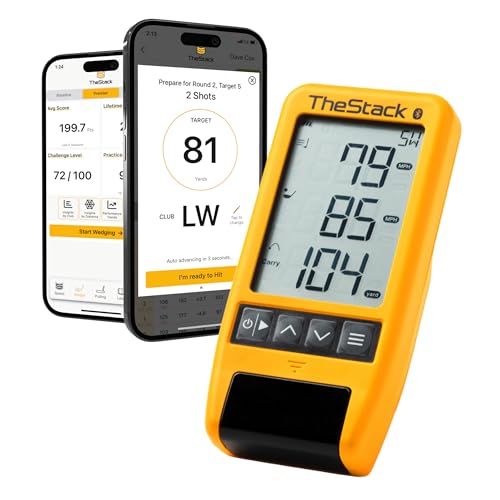
TheStack Radar pairs a launch-monitor-like capability with app-based training. It measures swing speed, ball speed, and estimated carry distance, then transmits data to the Stack App. It also includes a specialized wedging app feature that guides practice sessions to refine distance control and scoring on approach shots.
Buying decisions in this category hinge on how you prioritize data depth, integration with existing devices, portability, and coaching support. Arccos offers broad game-tracking and AI caddie features, while Blast Motion emphasizes real-time swing feedback and video capture. The Stack products lean toward measurable speed gains and structured drills, with Radar providing a hybrid of data and app-guided practice.
Buying Guide
- Tracking scope and data depth: For round-wide insights, choose Arccos GEN 4 or GEN 3+ for automatic game tracking and AI suggestions. If you primarily want swing metrics, consider Blast Motion, TheStack options, or Golf Pad TAGS for club-specific data.
- Ease of use and setup: Phone-based systems (Golf Pad TAGS, Blast Motion) tend to install quickly. Sensor-based kits (Arccos, TheStack Radar) may require more setup but offer richer data ecosystems.
- On-course utility: Systems with GPS rangefinding or AI caddie features help with course management. Arccos’ PGA TOUR integration and the Stack’s targeted practice modes are notable examples.
- Training approach: If you want to increase speed, TheStack and SuperSpeed emphasize structured overspeed training. If you seek all-around improvement, combine a tracking system with a dedicated training plan.
- Device compatibility and future updates: Verify compatibility with your phone, OS version, and whether the app receives regular updates or new features (e.g., new sensors, cloud backups).
- Budget and value: Weigh sensor count (number of clubs tracked), battery life, and included memberships or trial periods. Long-term value often comes from apps with robust coaching libraries and data exports.
- Data portability: Consider whether data can be exported or synced with other practice tools, platforms, or coaching sessions to maximize long-term improvement.
In summary, selecting a golf swing tracking system depends on whether you prioritize comprehensive game tracking, targeted swing analytics, or a speed-focused training path. The options featured here cover a spectrum from AI-powered scoring and club-distance data to structured speed training, providing multiple perspectives for a data-driven practice regimen.