Choosing the right junior golf balls helps young players develop confidence, refine swing mechanics, and enjoy every practice session. This guide highlights five kid-friendly options—from foam practice balls to soft-core designs—that balance durability, visibility, and performance. Each pick is evaluated for ease of use, safety, and how well it mirrors real golf ball behavior on a beginner-friendly course or practice area.
| Product | Type | Why It Stands Out | |
|---|---|---|---|
| Vice Tour Junior Golf Balls | Vice Golf | Compression and lift | Lower compression core, high-dimple lift, soft feel |
| Joyberg Practice Golf Balls 24 Pack | Joyberg | Plastic practice balls | 26-hole design for consistent spin, bright colors for visibility |
| GoSports Foam Golf Practice Balls | GoSports | Foam practice balls | Limited flight, indoor/outdoor safe, realistic feel |
| Guirnd Foam Golf Balls 20 Pack | Guirnd | Foam practice balls | 41mm size, dimpled texture, durable foam |
| Callaway Supersoft Golf Balls | Callaway | Standard distance ball | Soft feel, speed core, improved greenside control |
Vice Tour Junior Golf Balls
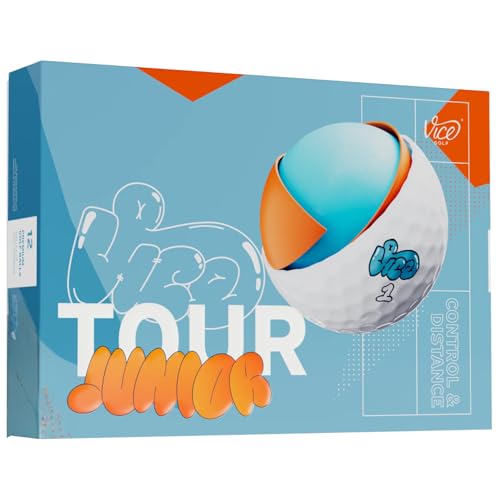
Vice Tour Junior Golf Balls are designed for younger players who need a forgiving feel without sacrificing feedback. Their lower compression core helps maximize energy transfer from slower junior swings, making it easier to get the ball airborne. A 312-dimple design provides lift and steadier carry, which can boost confidence on the course. The softer feel supports improved touch around greens, encouraging better short-game practice and enjoyment.
Ideal for practice on driving ranges or family courses, these balls balance distance and control while maintaining a kid-friendly response. They are well-suited for beginners who are transitioning from toy or practice balls to real golf balls, helping maintain rhythm and swing pace as kids learn the game.
Joyberg Practice Golf Balls 24 Pack

The Joyberg 24-pack features 42mm practice golf balls with a hollow design and 26 symmetry-driven holes. This setup provides a stable flight path and consistent spin, closely mimicking the behavior of standard balls while remaining forgiving for beginners. The bright multicolor palette improves tracking from tee to green, making it easier for kids to see their ball and learn shot shapes on various terrains.
These practice balls are ideal for backyard sessions, school fields, or limited spaces. The limited-flight design reduces risk and encourages repetitive practice, helping junior players build swing cadence, accuracy, and confidence without needing a full-size course. The optional color variety also makes it simple to designate different players during drills or family games.
GoSports Foam Golf Practice Balls

GoSports Foam Golf Practice Balls are a safe choice for indoor and outdoor practice. Each set includes 16 sturdy foam balls with a realistic dimple texture to mirror flight characteristics, while the foam construction minimizes damage to walls, furniture, or windows. The limited flight makes it possible to practice full swings in tight spaces, creating a practical training tool for homes, schools, or clinics.
These balls offer a practical balance of sensation and safety for junior players. By providing a soft impact experience, they help young golfers develop rhythm and tempo without fear of injury or property damage. Their indoor-friendly design makes them a dependable option for off-season practice and technique repetition.
Guirnd Foam Golf Balls 20 Pack

Guirnd’s 20-pack brings durable foam balls with a 41mm diameter and 5-color range for visibility across different playing environments. The surface features a realistic dimple texture, helping maintain predictable spin and flight, which is critical for juniors learning release and contact. The soft foam minimizes risk during mishits and encourages repeated practice sessions without wear on clubs or gear.
With dent and impact resistance, these balls are well-suited for backyards, parks, or indoor bays. The balance of realism and safety supports progressive skill development as young players experiment with aim, trajectory, and distance control across multiple practice targets.
Callaway Supersoft Golf Balls (2025, Pink)

Callaway Supersoft balls emphasize a soft feel and user-friendly performance. The HyperElastic SoftFast Core is engineered to maximize driver and iron speed, complemented by a soft greenside feel for better short-game feedback. Supersoft’s hybrid cover design focuses on distance with durability, while a new cover system enhances greenside spin and control for approach shots and chipping. For junior players, the softer response can lower fear of impact and improve confidence during early swing development.
These balls are suitable for beginners moving toward more consistent play, especially when kids are practicing on a variety of courses. The pink edition adds a playful aesthetic that can help with ball tracking in brighter environments and on colorful fairways or practice greens.
Buying Guide: Key Purchase Considerations
- Age and skill level: For beginners or younger kids, foam or soft-core practice balls reduce risk and encourage practice frequency. As skills improve, moving to softer yet real-ball designs offers better feedback.
- Flight and visibility: Choose colors and flight characteristics that help juniors track the ball. Bright colors and limited-flight designs can improve line awareness and shot shaping.
- Durability and safety: Indoor practice requires safer materials to prevent damage. Foam and plastic practice balls are ideal for home use, while standard distance balls suit outdoor practice on ranges.
- Cost per use: Sets with multiple balls offer value for family practice sessions and drills. Consider durability and replacement needs for extended practice periods.
- Feedback and progression: Look for balls that provide clear feedback on swing speed and contact. Softer balls generally offer more feel around the greens, aiding short-game development.
- Environment compatibility: Indoor vs outdoor use matters. Foam and limited-flight balls excel indoors; standard balls perform better outdoors on courses or ranges.
In practice planning, mix ball types to address different aspects of development: foam balls for safety and space constraints; soft-cover and low-compression balls for feel and feedback; and a few standard balls to acclimate to real course conditions as players mature.