Answer: For long-range measuring needs, these top-rated range finders deliver precise distances, reliable angle data, and practical targeting aids. They’re best for hunters, archers, golfers, and tactical shooters who require fast, accurate readings in varying light and terrain. This guide highlights five models with clear advantages for different use cases and a concise buying guide to help you choose.
Buyer summary table
| Product | Best For | Key Benefit | Limitation |
|---|---|---|---|
| CIGMAN Hunting Range Finder 3280 Yards | Extreme range hunting and versatility | Ultra long range up to 3280 yards with 7 modes | Heavier feature set may be overkill for casual use |
| Vortex Optics Viper HD 3000 | Low-light and rapid target acquisition | HD optics, four target modes, tripod adaptable | Higher price point |
| REVASRI Hunting Laser Rangefinder | Budget-friendly multi-sport use | 7 functions, memory, continuous scan | Battery life may vary with mode use |
| Leupold RX-1400i TBR/W Gen 2 | Precision shooting with wind/ballistics | Flightpath, true ballistic range, bow mode | Specialized features may suit archers best |
| Vortex Impact 4000 | Integrated ballistics on a rifle setup | GeoBallistics, weather sensors, Bluetooth | Rail-mounted; needs compatible setup |
Hunting Range Finder 3280 Yards by CIGMAN

The CIGMAN model delivers an extremely long maximum range with fast distance reporting. It supports seven modes, including slope and angle calculations, two-point height, golf slope compensation, and flagpole lock. The device switches between meters and yards, making it flexible for different shooting disciplines. Its multi-coated lens and 6x magnification provide a clear image in dense cover or low light, aiding target identification before pulling the trigger or releasing an arrow.
Best for: Hunters needing long-range readings in variable lighting and rapid target acquisition. Also suitable for golf practice or multi-sport use where range data matters in real time.
Why selected: The expansive range capability combined with diverse modes makes this a versatile pick for users who encounter moving targets and require precise distance plus height/angle data in one device.
Caution: The feature set is broad, and learning all modes may take time for beginners. Ensure you understand the two-point height/angle modes before relying on them in the field.
Vortex Optics Viper HD 3000
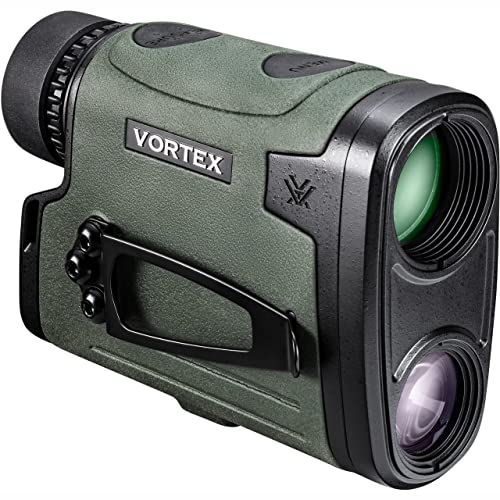
The Viper HD 3000 is designed for quick action with high-quality optics. It offers a 3,000-yard max range with game range limits and four target modes plus LOS/HCD ranging. The red OLED display remains readable in lower light, and the device is tripod adaptable for steady shots. Its XR Plus coatings maximize light transmission for better distant readings and color fidelity, enhancing target identification and shot planning.
Best for: Hunters and shooters who prioritize fast, reliable performance in varied light and want flexible ranging modes for different hunting scenarios.
Why selected: Its balance of long-range capability, optical clarity, and flexible targeting options makes it a solid all-around choice for serious enthusiasts.
Caution: The premium optics may come with a higher price and weight, which could matter on long treks.
REVASRI Hunting Laser Rangefinder

The REVASRI model emphasizes versatility with seven functions, including continuous scan and a memory feature that restores the last-used mode after powering down. It measures up to 1000 yards with 6.5x magnification and uses coated glass for a bright display. The data includes angle, height, and horizontal distances, making it adaptable for both golfing and hunting. Its clarity is maintained with a bright LCD, and accuracy is stated at ±1 yard, suitable for most sporting and hunting needs.
Best for: Budget-minded buyers who need a multi-use device for both hunting and golf or wide-area scanning.
Why selected: The memory and continuous scan features provide practical value for users who switch targets or activities often.
Caution: Lower maximum range compared to high-end models; rely on the device within the stated range for accuracy.
Leupold RX-1400i TBR/W Gen 2

The Leupold RX-1400i Gen 2 emphasizes ballistic accuracy and wind calculation with Flightpath integration. It provides true ballistic range and the ability to estimate wind hold points at longer distances, which is valuable for precision shooting. A selectable Bow mode helps archers anticipate arrow obstructions and angle-compensated ranges when using a bow. The device is designed for serious long-range shooters who need predictive data to improve shot placement.
Best for: Archers and rifle shooters who rely on ballistics-aware rangefinding for long-range shots.
Why selected: Flightpath and wind holdover features give it a niche appeal for precision enthusiasts who demand ballistic-aware targeting.
Caution: The bow-specific features work best when the shooter is using compatible equipment and settings; ensure your setup aligns with Flightpath guidance.
Sig Sauer Buckmasters 1500 Rangefinder

The Buckmasters 1500 monocular rangefinder emphasizes fast ranging with a bright red illuminated display optimized for low-light hunting. It’s IPX-4 waterproof, making it a practical option in damp conditions. The device carries onboard ballistic groups in Buckmasters mode, which helps users identify appropriate holdover marks for various shooting scenarios. This model blends value with practical hunting-specific features.
Best for: Hunters who hunt in low light and need a rugged, waterproof monocular with quick ranging and ballistic holdovers.
Why selected: The integrated ballistic holdover feature eases shot planning in poor visibility conditions.
Caution: The Buckmasters mode is most useful for users who need preset ballistic data; verify the data alignment with personal loads before shooting.
REDTIGER Golf Rangefinder with Slope

The REDTIGER Golf rangefinder pairs slope compensation with a magnetic mount and 1200-yard maximum. It includes USB-C charging and a transflective LCD display for readability in bright sun. With six to seven measurement modes, including slope compensation and flagpole locking, it supports both casual rounds and competitive play where slope data is allowed. This model is a practical hybrid for golfers who want reliable distances and easy charging.
Best for: Golfers who want slope-adjusted readings and convenient charging in a compact unit.
Why selected: The combination of slope functionality and a magnetic mount makes it a convenient on-course tool for quick distance checks.
Caution: Slope data is not allowed in all competitions; verify event rules before use in tournaments.
Vortex Optics Sonora HD 1800

The Sonora HD 1800 provides a balance of range and portability with 6x magnification and a 21mm objective lens. It ranges up to 1,800 yards on reflective targets and 700 yards on game. The device uses fully multi-coated lenses for clarity and low-light performance. HCD (Horizontal Component Distance) angle-compensated ranging helps shooters account for elevation changes, improving shot precision.
Best for: Hunters and shooters who need reliable long-range data with strong low-light performance and angle compensation.
Why selected: The Sonora’s compact design and effective HCD technology make it a practical choice for field use and quick target confirmation.
Caution: The maximum range is lower on unreflective targets; plan accordingly for open terrain or non-reflective game.
Vortex Optics Impact 4000

The Impact 4000 is a rail-mounted rangefinder designed for integration with a rifle setup. It features quick ballistic corrections via its display and Bluetooth connectivity to the GeoBallistics app. On-board environmental sensors—compass, humidity, barometric pressure, and temperature—along with Wind Bearing Capture Mode, provide a comprehensive data set for long-range shooting. It can store up to a range card and connects through the Vortex Relay Network for remote data access.
Best for: Tactical and precision shooters who want integrated ballistics and environmental data on a firearm platform.
Why selected: The built-in weather sensors and GeoBallistics integration offer advanced data for long-range calculations in challenging conditions.
Caution: Rail-mounted units require compatible firearm setups and mounting hardware to function properly.
Buying Guide: Key Considerations When Choosing a Long Range Range Finder
- Ranging range and target type: Consider whether you need maximum distance for open terrain or shorter, precise ranges for dense woods and game.
- Angle and distance data: Decide if you want angle-compensated readings (HCD/LOS) and whether you need height or two-point distance measurements.
- Display readability: Look for red or green OLED/LCD displays with good contrast and low-light performance.
- Modes and versatility: Evaluate modes like continuous scan, flagpole lock, slope compensation, and golf-specific features to match your use case.
- Weight and form factor: Heavier devices may be more feature-rich but less comfortable to carry on long hunts or hikes.
- Durability and weather resistance: IP ratings and rugged construction matter in wet or dusty environments.
- Battery life and charging: Rechargeable models with USB-C tend to be convenient for frequent users.
- Mounting options: Rail mounting or tripod compatibility can influence stability and accuracy for long-range shots.
- Legal considerations: Slope-compensation features may be restricted in some competitions; verify local rules.
- Budget vs. need: Prioritize features that directly support your primary use, whether hunting, golf, or tactical shooting.
FAQ
- What is the typical accuracy of long-range range finders?
Most devices claim ±1 yard to a few yards at long range, depending on target reflectivity and lighting. Check the manufacturer’s specifications for the exact figure.
- Do range finders work well in low light?
Yes, many models use red OLED or bright LCD displays and high-contrast optics to maintain readability in dawn or dusk conditions.
- Is slope compensation legal for all competitions?
No. Some tournaments ban slope-adjusted readings; always verify the event rules before use.
- Can I use these devices for golf and hunting?
Several models offer modes suitable for both golf and hunting, but verify which modes are active or restricted for your activity.
- Do these range finders measure angle or height?
Many provide angle, height, and horizontal distance through various modes, improving accuracy on uneven terrain.
- Are these devices waterproof?
Several models offer IPX ratings or rugged seals to withstand rain or splashes; check the specific product’s ratings for field conditions.