Choosing the right golf cart battery is essential for consistent performance, range, and longevity. This guide highlights precision-focused options that emphasize safety, efficiency, and reliable peak power. Explore top lithium and lead-acid choices, plus a precision tester to monitor electrolyte density for optimal maintenance.
| Product | Brand | Battery Type | Key Benefit |
|---|---|---|---|
| LOSSIGY 48V Lithium Golf Cart Battery | LOSSIGY | Lithium LiFePO4 | High energy density with robust BMS protection |
| OGRPHY 48V Lithium Golf Cart Battery | OGRPHY | Lithium LiFePO4 | 200A BMS, long cycle life, strong protection |
| Rocket L-875 170Ah 8V Golf Cart Battery | Rocket | Lead-acid (8V) | Direct replacement option with high capacity |
| SOURCEPOW 36V 105Ah Lithium Golf Cart Battery | sourcepow | Lithium LiFePO4 | High power output with smart monitoring |
| LOSSIGY 36V Lithium Golf Cart Battery | LOSSIGY | Lithium LiFePO4 | 200A BMS protection, easy installation |
Below are five products that best match precision needs for golf carts, balancing performance, safety, and long-term value. Each entry provides a quick overview, key features, and how it supports consistent golf-cart power delivery.
LOSSIGY 48V Lithium Golf Cart Battery
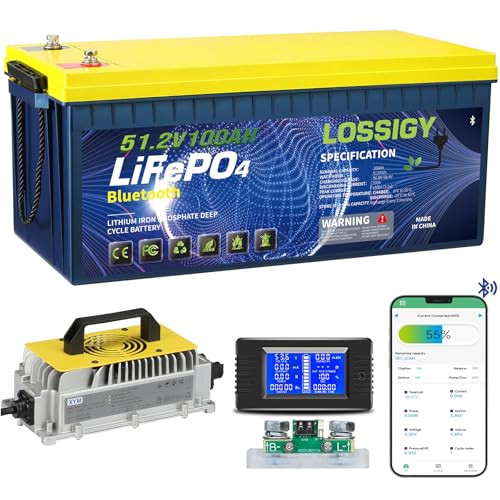
Brand: LOSSIGY. Battery Type: LiFePO4 lithium. Key features include Grade A cells for higher energy density and stable performance, a built-in BMS protecting against over-charge, over-discharge, temperature extremes, and short circuits, and a design that facilitates easier installation and maneuverability in 48V golf-cart systems. This configuration aims for longer cycle life and reliable hill-climbing ability, with a focus on safety and maintenance reduction.
OGRPHY 48V Lithium Golf Cart Battery

Brand: OGRPHY. Battery Type: LiFePO4 lithium. Features include a 200A BMS with 1000A peak current, compatibility with major golf-cart controllers, and a claimed 50+ miles range in real-world testing. It emphasizes extended cycle life (thousands of cycles) and a maintenance-free design, making it a strong option for users seeking high-power performance in a 48V format with substantial protection features.
Rocket L-875 170Ah 8V Golf Cart Battery
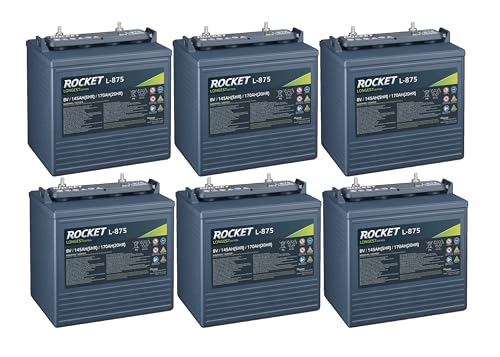
Brand: Rocket. Battery Type: Lead-acid 8V configuration (set of 6). Key specs include 170Ah capacity per 8V unit. This setup is positioned as a direct replacement option for carts configured around Trojan T-875 equivalents, offering robust discharge capacity suitable for consistent propulsion and hill-climbing needs in a traditional lead-acid setup.
SOURCEPOW 36V 105Ah Lithium Golf Cart Battery

Brand: sourcepow. Battery Type: LiFePO4 lithium. Features include a 105Ah capacity with Grade A cells and a built-in 200A BMS. The package emphasizes compatibility with major golf-cart brands, fast charging support (with a provided charger), strong discharge capabilities, and a compact energy footprint for reliable 36V performance with notable peak power handling.
LOSSIGY 36V Lithium Golf Cart Battery

Brand: LOSSIGY. Battery Type: LiFePO4 lithium. Notable features include a built-in 200A BMS with protection against over-charge, over-discharge, temperature extremes, and short-circuiting, plus a design aimed at easy installation for 36V systems. The 36V configuration suits carts requiring a balance of energy density, weight savings, and simplified maintenance compared to older lead-acid setups.
Buying Guide: Key Considerations For Precision Golf Cart Batteries
Choosing the right battery involves evaluating how you use your cart, the terrain, and the maintenance you’re prepared to perform. The following considerations help compare options across chemistry, capacity, and system integration.
- Battery Chemistry: Lithium (LiFePO4) tends to offer higher energy density, longer cycle life, and lighter weight than lead-acid. It often provides better performance on hills and longer usable range, but initial cost is higher. Evaluate the total cost of ownership across years of use.
- Voltage and System Compatibility: Ensure the battery voltage matches your cart’s controller and motor configuration (e.g., 36V vs 48V). Some models are designed to upgrade from lead-acid to lithium with compatible BMS protection.
- Battery Management System (BMS): A robust BMS protects against overcharge, over-discharge, temperature extremes, and short circuits. A high-quality BMS can extend life and maintain performance across cycles.
- Cycle Life and Durability: Lithium batteries often promise thousands of cycles under normal usage, while lead-acid offerings typically deliver fewer cycles. Consider how frequently you ride and how long you expect each battery to last without replacement.
- Charging Speed and Charger Compatibility: Check charger compatibility and whether fast charging is available. A system with a smart charger can shorten downtime between rounds.
- Weight and Installation: Lithium packs are lighter than equivalent lead-acid packs, easing installation and access under seats. Weight affects cart handling and payload capacity.
- Maintenance Needs: Lead-acid requires water top-offs and more routine checks. Lithium systems are generally maintenance-free but may require periodic battery health monitoring via a monitor or app.
- Monitoring and Diagnostics: Integrated LCD displays, mobile apps, and Bluetooth monitoring help track voltage, current, and state of charge. This supports proactive maintenance and better range planning.
- Warranty and Service: Look for solid warranty terms and accessible customer service. Longer warranties on lithium packs can offset higher initial costs over time.
In summary, precise battery selection balances performance with total cost of ownership. Lithium options tend to deliver longer life, lighter weight, and higher efficiency, while lead-acid configurations may offer a lower upfront price. For golf carts used in varied terrain and frequent rounds, a well-protected LiFePO4 pack with a capable BMS often provides the most consistent, low-maintenance power solution.