The golf swing is a complex sequence of coordinated motions. Using targeted training aids can help players of all levels develop better tempo, balance, and plane. This article highlights five proven tools designed to refine swing mechanics, reinforce muscle memory, and provide actionable feedback on the driving range or at home.
The following quick-reference table lists the selected products and what they aim to improve. It serves as a snapshot to compare focus areas and ease of use before diving into detailed sections.
| Product | ||
|---|---|---|
| TrueBirdie Swing Correcting Arm Band | Arm alignment; chicken wing prevention | Keeps arms in sync to build a consistent swing |
| Golf Rope Swing Trainer (Two Models) | Swing speed, rhythm, posture | Provides immediate feedback and multiple training methods |
| WINNER SPIRIT Real Swing 300 | Impact feedback; trajectory awareness | Replicates real swing feel and tracks progress |
| Orange Whip Golf Swing Trainer | Rhythm; balance; flexibility | Counterbalanced design for coordinated, on-plane swings |
TrueBirdie Swing Correcting Arm Band

The TrueBirdie Golf Swing Training Aid is designed to prevent the common “chicken wing” swing by keeping the arms aligned during the entire motion. By maintaining arm synchronization, this trainer aims to promote a more connected takeaway, linear extension through impact, and a repeatable swing path. It’s described as a convenient accessory to carry to the driving range, encouraging consistent practice and muscle memory development that translates to on-course performance.
Key features emphasize arm-body synchronization and repetition as core benefits. Users may experience improved awareness of arm position relative to the torso, helping to reduce compensations that lead to inconsistent contact. While simple in concept, the band provides a tangible cue for maintaining proper slot and extension. This makes it a suitable option for beginners or players seeking a reminder to keep elbows connected during the swing.
Golf Rope Swing Trainer (Speed, Rhythm, Flexibility)

This Golf Rope Swing Trainer focuses on elevating swing speed, tempo, rhythm, and flexibility. It features a foam ball at the end to provide immediate, tangible feedback about your swing path, helping you visualize and correct misalignments quickly. The trainer also includes a counterweight rope with an optimal training weight around 310 grams, designed to resemble realistic swing forces and promote muscle memory during practice.
Three distinct training methods are highlighted to address different facets of the swing: power, rhythm, and accuracy. By adjusting the rope band position, users can target specific aspects of their technique and gradually build a more consistent, on-plane swing. The trainer is marketed as a portable solution ideal for indoor or outdoor use, making it accessible for regular, in-between-session practice.
Golf Rope Swing Trainer (Professional Level)

The second rope trainer offers a professional-grade approach to developing swing speed, tempo, and flexibility. It emphasizes improving swing posture for a powerful, consistent stroke. The upgraded weighted rope is designed to maximize impact and assist muscle memory, supporting distance gains as technique improves. Foam-ball feedback remains a core feature, helping players visualize their swing path and make quick corrections on the range.
Three training modes enable golfers to refine different dimensions of their technique: power, rhythm, and accuracy. Setting adjustments encourage players to focus on specific swing components, reinforcing repeatable patterns and a smoother transition from backswing to impact. This model is presented as a versatile tool for players at all levels seeking structured, progressive training.
WINNER SPIRIT Real Swing 300 Golf Trainer

The WINNER SPIRIT Real Swing 300 offers a realistic practice experience with a focus on true impact feedback. By providing a more authentic swing feel, this trainer aims to help players assess alignment, contact, and trajectory using immediate, tangible cues after each practice swing. The model emphasizes trajectory checking and control, allowing golfers to monitor their swing path and identify deviations that affect accuracy.
Users can expect improvements in tracking their swing trajectory, reducing head-up issues, and achieving more consistent contact. The design is described as height-adjustable, enabling adaptation to different players and practice spaces. This adaptability supports a progressive training plan, from early attempts to refined, repeatable swings that translate to on-course performance.
Orange Whip Golf Swing Trainer
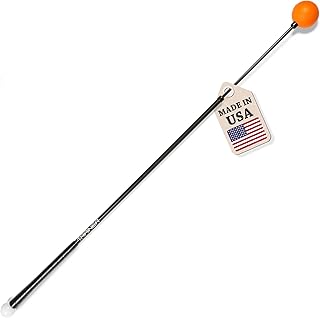
The Orange Whip is widely recognized as a top-rated training aid in golf education communities. Its patented counterbalanced swing system helps players develop rhythm, flexibility, balance, tempo, and strength. The flexible shaft coordinates swing mechanics across the arms, torso, and hips, encouraging a smooth, on-plane swing that translates to more consistent shots on the course. The product is positioned as both a warm-up tool and a training aid for regular practice sessions.
Proponents highlight its ability to sculpt an athletic swing, with feedback that emphasizes tempo and balance. The design aims to deliver noticeable cues during swing rehearsal—significant for players seeking to improve coordination between upper and lower body movements. The Orange Whip is marketed as a durable, USA-made option that stands out in terms of feel and responsiveness during practice.
Buying Guide: Key Purchase Considerations And Comparisons
- Goal alignment: Determine whether you want to fix arm alignment, increase swing speed, improve tempo, or enhance overall balance. The TrueBirdie band favors arm synchronization, while rope trainers address speed, rhythm, and path.
- Feedback type: Consider immediate physical feedback (foam ball, counterweights) versus real-time trajectory cues. Tools with instant feedback help shorten the learning loop and speed progress.
- Portability and space: If you practice at home or on the go, lightweight, compact designs (like rope trainers) can be more convenient than larger mats or stand-alone devices.
- Adjustability: Products offering multiple training modes or adjustable weights accommodate evolving skill levels and different body types, enabling a longer-term training plan.
- Practice consistency: Choose a tool that encourages regular, repeatable practice. Consistency compounds skill, so ease of use and clear cues are important.
- Versatility: Some tools support warming up before rounds, while others focus exclusively on swing mechanics. A combination approach may deliver the broadest benefits.
- Safety and suitability: Ensure the device fits your current physical condition and won’t cause strain or overuse. Start with lighter loads or shorter sessions and progress gradually.
- Value and durability: Consider build quality, warranty, and reputation of the brand. Reputable training aids tend to yield more reliable long-term results.
- Progress tracking: Tools that let you document improvements in contact, tempo, or distance can help sustain motivation and guide adjustments over time.
Across these five selections, users can target specific swing weaknesses—from arm-slot issues to rhythm and tempo—while gaining practical feedback that translates to on-course gains. When choosing, balance your current level, preferred training style, and how much you value portability versus features like adjustable resistance or multi-method training options.